In 2025, West Hollywood will be doing the “Time Warp” again. As fans everywhere slip into their fishnets for the 50th anniversary of “The Rocky Horror Picture Show,” we rewind to 1974, when the live production premiered in WeHo. Before the midnight screenings, before the call-backs and before Dr. Frank-N-Furter made a grand entrance on the big screen, “The Rocky Horror Show” leapt across the pond and landed on the stage of The Roxy Theatre — a venue that was just as new, daring and ready to break the rules as the show itself.
Lou Adler’s London Discovery
Lou Adler was already a legend in the music world, the man behind Carole King’s “Tapestry,” the Monterey Pop Festival and chart-topping hits that shaped the 1960s and ’70s. But in London, Adler stumbled into a gloriously strange musical playing in a tiny theater. Richard O’Brien’s creation was unlike anything he’d ever seen — a glam-rock Frankenstein, gender-bending camp and infectious rock ‘n’ roll. Adler didn’t just watch in awe, he saw the potential for something bigger.
So when he returned to LA, he brought the whole spectacle with him. And where better to stage such a deliciously subversive import than his own newly opened Sunset Strip venue, The Roxy Theatre? The Roxy had just opened its doors in 1973, but was already making noise as a spot where legends were born — and it was about to host a “science-fiction double-feature” of its own.
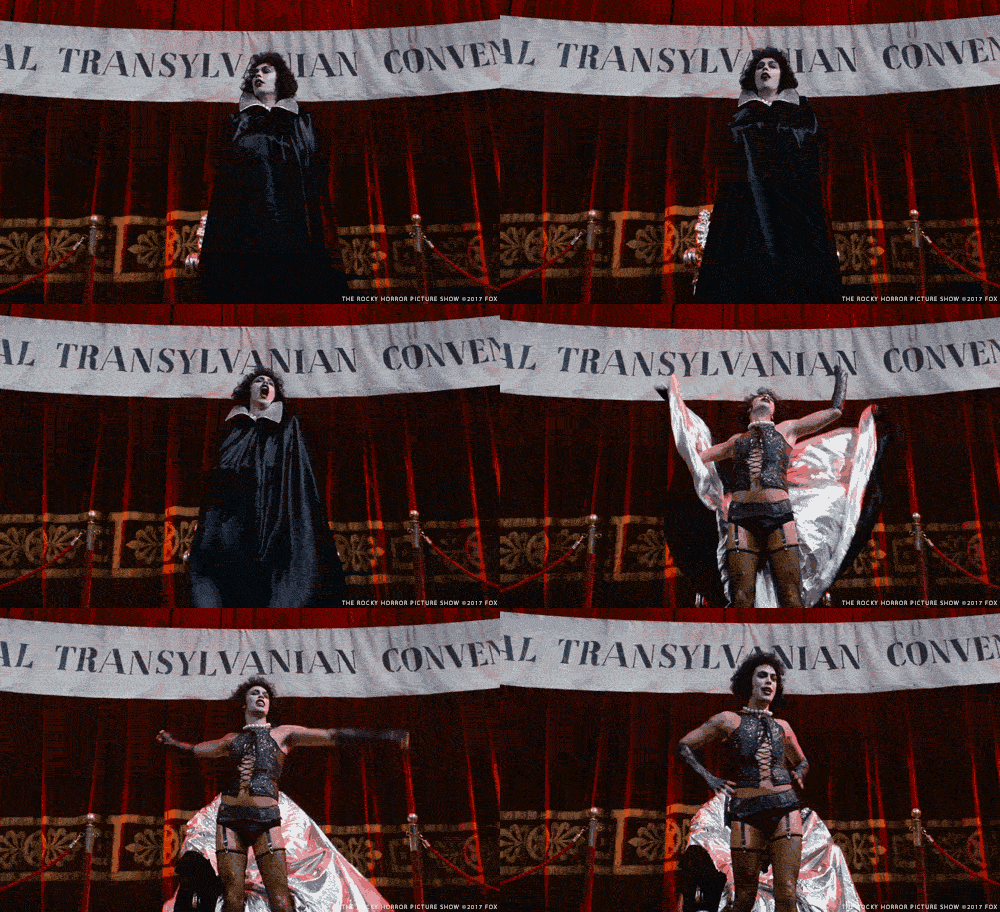
The Sunset Strip Was Ready for a Mad Scientist in Heels
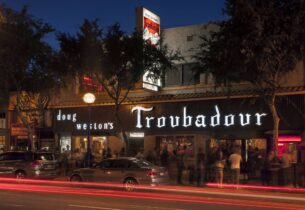
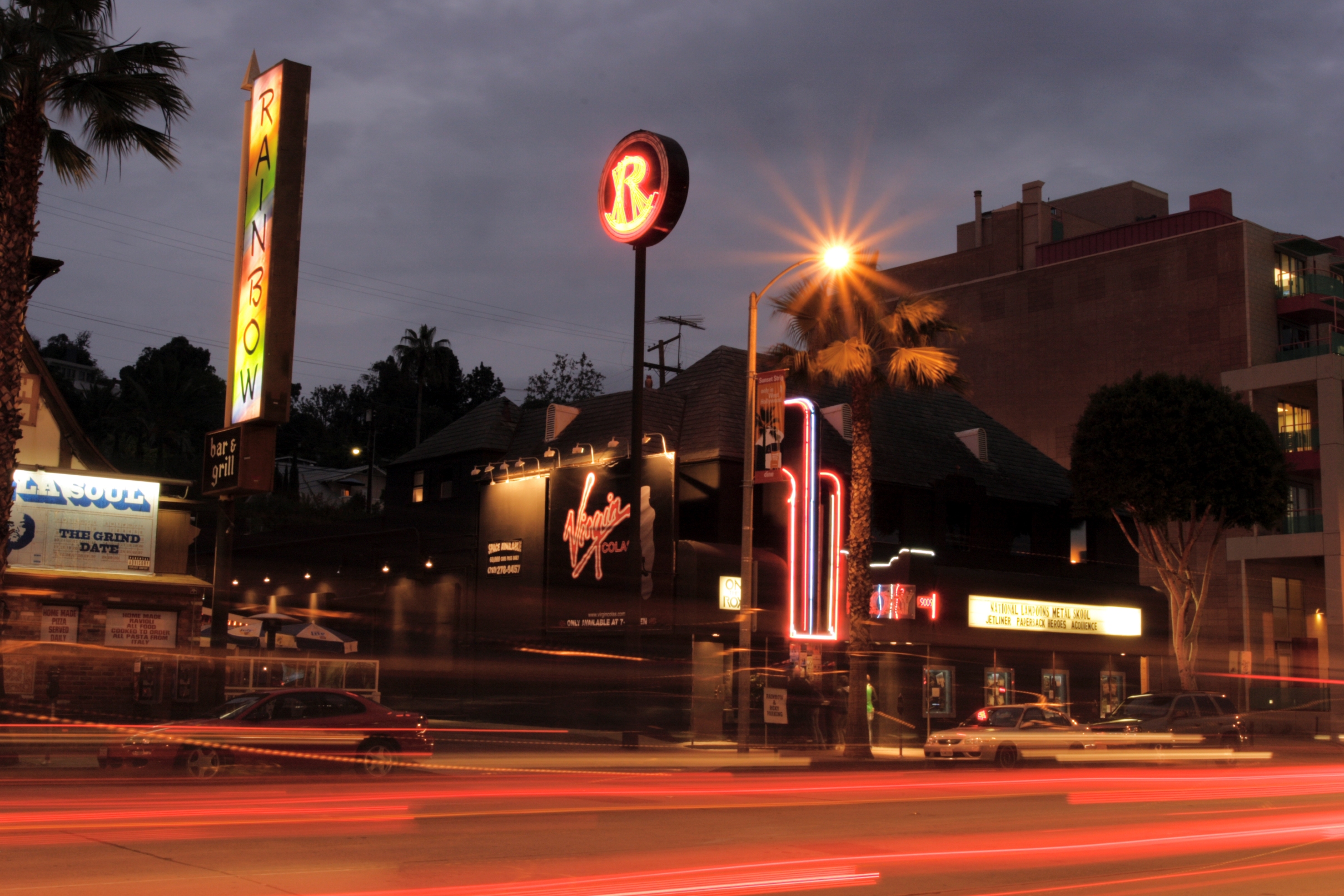
In the early ’70, West Hollywood’s Sunset Strip was uniquely the neon playground of rebellion, where glam rock strutted into the mainstream. The Whisky a Go Go pulsed with acts like Iggy Pop, the Rainbow Bar & Grill buzzed with celebrity regulars, comedy clubs toyed with taboo and the Troubadour launched icons like Elton John.
Against this backdrop, “The Rocky Horror Show” fit like a trusty pair of glitter-dusted stilettos. When the show opened at The Roxy in March of 1974, it attracted rock royalty like John Lennon, Mick Jagger and Cher, Hollywood stars like Jack Nicholson, and plenty of curious misfits who’d heard whispers about a musical where aliens, corsets and mad science collided.
The cast included future film Frank-N-Furter Tim Curry himself, in all his high-heeled glory. Every night of the show’s nine-month run felt electric, unpredictable, and just a little indecent — exactly the way the Strip liked it.
Rocky Horror History: Stage Lights to Silver Screen
That short but explosive run at The Roxy caused a local sensation and cemented Adler’s belief that “The Rocky Horror Show” could leap from the stage to the big screen. Just months after the show began in West Hollywood, cameras rolled in England, with Tim Curry, Patricia Quinn, Nell Campbell and Meat Loaf reprising their roles. “The Rocky Horror Picture Show” hit theaters in September 1975 — and promptly flopped. But late-night screenings sparked something new. Audiences began dressing as their favorite characters, shouting back lines, throwing toast and toilet paper, and dancing the Time Warp in the aisles. Slowly, it transformed into the world’s most beloved midnight movie.
And the cult following, the costumes, the call-backs — all of it traces back to those sweaty, glitter-filled nights on The Roxy stage in West Hollywood, where “Rocky Horror” first proved it could shock and delight audiences worldwide.
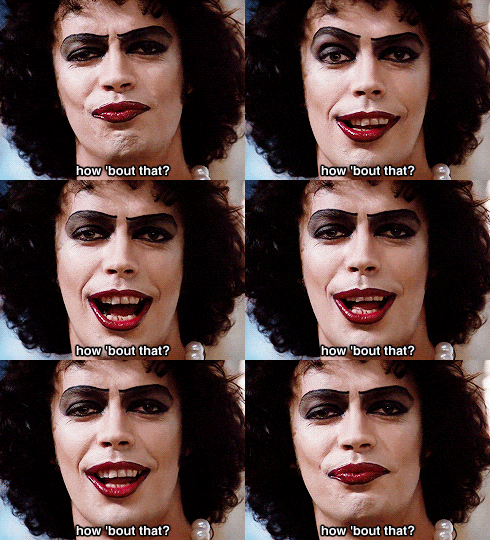
The Roxy Theatre: Still Rocking
In 2023, The Roxy blew out its own 50 candles, celebrating five decades of live music, groundbreaking performances and cultural firsts. Bruce Springsteen, Prince, Neil Young, David Bowie and Bob Marley & The Wailers are just a few of the icons who’ve graced its stage. Today, it’s still where you go to catch a rising star before the rest of the world knows their name. It’s a place that understands the magic of a little risk, a little rebellion, and the kind of art that makes you want to jump to the left and step to the right.
So as “The Rocky Horror Picture Show” turns 50 in 2025, remember: Before the “Time Warp” became a ritual and the light over at the Frankenstein Place flickered onto cinema screens, the revolution began under the stagelights of The Roxy Theatre on the Sunset Strip — and it was love at first fright.